
Cut-Edge Corrosion
Exposed sheet edges and overlaps can corrode as protective finishes deteriorate, allowing rust to spread beneath adjacent coatings.
Specialist commercial metal roof repairs, cut-edge corrosion treatment and liquid-applied waterproofing solutions for warehouses, factories and industrial buildings throughout the UK.
Commercial metal roofs are durable, but over time protective finishes, roof sheet edges, fixings and weatherproofing details can deteriorate and allow water ingress.
Elite Waterproofing provides targeted metal roof repair and refurbishment services, addressing the defects responsible for leaks and progressive roof deterioration.
Using suitable surface preparation, corrosion treatment and liquid-applied waterproofing systems, we can refurbish appropriate existing roof coverings without necessarily replacing the entire roof.
Our approach considers the complete roofing system, including sheet laps, cut edges, fasteners, flashings, rooflights, penetrations and gutters.
Metal roofs can develop leaks at several different locations, often long before the entire covering reaches the end of its useful life.
Exposed sheet edges and overlaps can corrode as protective finishes deteriorate, allowing rust to spread beneath adjacent coatings.
Deteriorated washers, fasteners and bolt heads can allow water to enter around fixing positions.
Ageing seals, sheet movement and corrosion can compromise the weatherproofing of overlapping metal panels.
Failed seals and connections around rooflights may allow rainwater to enter even when the adjoining sheets remain sound.
Vents, ducting, plant installations and abutments introduce additional details requiring suitable weatherproofing.
Drainage defects can cause water ingress, while condensation from inadequate thermal control may be mistaken for roof leaks.
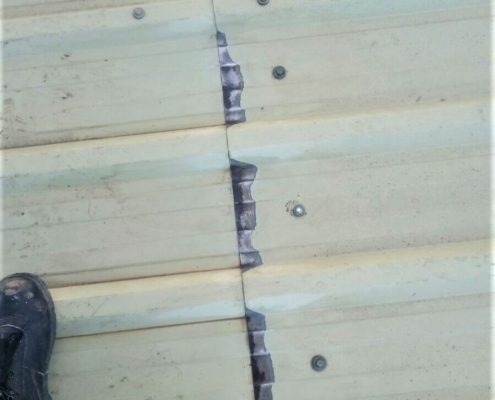
Cut-edge corrosion is a common problem affecting coated metal roof sheets, particularly around sheet overlaps, eaves and exposed edges.
Where the protective coating is damaged or insufficient at the edge of a sheet, moisture can initiate corrosion. This may progress beneath the surrounding coating, causing blistering, peeling, staining and eventual perforation.
Early treatment can help protect suitable roof sheets before deterioration becomes too extensive for refurbishment.
Effective treatment requires more than covering visible rust. Surface condition, preparation and system compatibility are important to the finished waterproofing treatment.
Identify corrosion, failed joints, leaks and other defects requiring repair.
Remove loose contamination and prepare affected areas in accordance with the selected treatment specification.
Apply compatible primers where specified and treat vulnerable sheet edges, laps and fixings.
Apply the selected liquid-applied system to create a protective barrier over treated areas.
Examples of metal roof sheet edges and overlaps from Elite Waterproofing's existing cut-edge corrosion service.

In addition to localised corrosion treatment, suitable metal roofing systems may benefit from more comprehensive waterproofing refurbishment.
Treatment of leaking sheet overlaps and vulnerable joints using compatible sealants, reinforcement and liquid waterproofing materials.
Assessment and treatment of deteriorated fastener locations, with replacement of unsuitable components where required.
Remedial waterproofing around rooflight junctions, penetrations, abutments and other complex interfaces.
Broader protective coating systems may be appropriate where the roof substrate remains suitable and the system is correctly specified.
Repairing suitable existing coverings may cost less than extensive roof replacement. Savings depend on roof condition and specification.
Targeted repair works can sometimes be organised around ongoing business activity, subject to access and safety arrangements.
Appropriate preparation and compatible protective treatments can help limit further deterioration of treated areas.
Liquid-applied systems can accommodate complicated roofing details where conventional sheet materials may be difficult to apply.
Suitable repairs can extend the serviceable life of existing roofing, depending on roof condition and ongoing maintenance.
Products and application methods can be selected according to substrate condition and the approved specification.
Not every corroded metal roof needs replacement. Equally, some roofs are too deteriorated for coating to be an appropriate long-term solution.
Suitable for roofs where the underlying sheets remain serviceable and problems can be addressed through corrosion treatment, detailed repairs or compatible coatings.
A roof assessment helps determine the appropriate treatment areas and required preparation.
Discuss RefurbishmentReplacement may be more appropriate where corrosion has caused extensive damage, sheets have lost serviceability or the building requires a new roofing specification.
This may involve individual roof sections or a more extensive roof replacement programme.
Explore ReplacementMetal roof refurbishment can involve occupied factories, warehouses, retail premises and other operational buildings.
Access equipment, material movement, roof-level work, weather conditions and activities below must all be considered during planning.
The preferred repair method will depend on the nature of the defects, the building, the location of work and any restrictions affecting normal business operations.
Where possible, works can be sequenced to reduce disruption, while prioritising appropriate safety controls and installation requirements.
Corrosion can begin where the protective finish of a metal roof sheet is damaged, thin or absent, particularly at exposed edges. Moisture can then penetrate beneath adjacent coatings and cause further deterioration.
Yes, where the remaining metal is in suitable condition. Repair commonly involves appropriate surface preparation, compatible primers and protective treatment. Severely damaged sheets may need replacement.
In many cases, suitable existing metal roofs can be refurbished using detailed sealing and compatible liquid-applied waterproofing systems. An assessment is needed before specifying treatment.
Warning signs include rust staining, coating delamination, repeated leaks, damaged fixings, perforated areas and deterioration around roof sheet overlaps.
Yes. Condensation can occur when warm, moist internal air contacts colder roof surfaces. Identifying whether moisture comes from condensation or external rainfall is important before repairs.
This depends on the existing substrate, preparation, system specification, exposure conditions and maintenance. Any product or workmanship guarantee should be confirmed in writing.
Whether you're dealing with cut-edge corrosion, leaking roof sheet laps, deteriorated fixings or wider metal roof refurbishment requirements, contact Elite Waterproofing to discuss your building.
Call 01509 414300